_tease_Alf_%22Bait%22_Gould_about_his_backless_swimsuit_(a_gift_from_his_girlfriend),_Bondi_Beach,_10_October_1932,_by_Sam_Hood_(4116515330).jpg)
Who We Are
Find out all about Surf Life Saving Sydney, what we do, and how you can join us.


Surf Life Saving Sydney respects and acknowledges the traditional custodians across all the lands on which we live, work and patrol, and we pay our respects to Elders past, present and emerging. Background Image credit: 'Eora Dreaming' depicts the community of the fifteen Surf Life Saving Clubs throughout Sydney, stretching from North Bondi south to Burning Palms in the Royal National Park - Artist 'Billy Reynolds', proud Dharawal and Yuin man.

The Sydney region is part of the Eora nation and includes the Gadigal people along the south of the harbour and along the eastern beaches, the Birrabirragal around the southern entrance to Sydney Harbour, and the Kamaygal south of the eastern beaches. The Dharawl people are based south of Botany bay with the Gweagal north of Port Hacking as part of the Tharawal nation.

Indigenous Australians were often in and around the water searching for food and resources, and cooling off over the summer months. Men would fish with spears from rock platforms and both men and women would fish from canoes with hooks made from shellfish and line made from plants or even hair. The catch included mammals, such as seals, dugongs, dolphins and whales; seabirds from petrels to penguins; shellfish such as oysters, mussels and cockles; crustaceans including crabs, lobsters and prawns; and even an occasional turtle, as well as local fish species such as bream, snapper and flathead.

With the arrival of Europeans, water activities were mainly limited to the immediate region of the settlement, being Sydney Harbour and the Parramatta River, and soon, Botany Bay and the Cooks River. The NSW Surveyor WR Govett stated in 1837 that in the neighbourhood of Sydney there are no beaches fit for bathing. The eastern coves of Sydney Harbour were left for industries that the settlement didn’t want to see, and smell, such as boat building and in 1872, a fishery exclusively for the use of the sick.

Access to the beaches took time to develop. Whilst the Macquarie Lighthouse at Dover Heights, and South Head Road were build in 1816, access to the beaches was a few years later. The first road access to Bondi was established in the 1860s with the tramline built in 1884. Road access to Coogee was opened in 1859 with the tramline in 1883. Bronte developed access in the 1880’s with a horse drawn bus and the tramline in 1911. Clovelly had access in 1913 when the tramline was built down to the beach. Maroubra followed in 1921 when its tramline was extended to the beach. Cronulla became accessible after the railway to Sutherland was built in 1886, with the railway extending to the beach in 1939. Finally the Royal National Park was established in 1879 with the railway further south opening in the late 1880s. As access to the beaches became easier, the rise in beach goers also grew.

With most (non indigenous) residents in the new colony from Britain, many of the attitudes to swimming had been imported as well. Their enthusiasm to ocean swimming was very limited, and they saw the ocean as a reminder of the gruelling voyage that had brought them out to Australia.
In 1833, the Sydney Police Act ensured that no one could swim in the sea between 8am and 6pm. These were expanded in the 1830’s on the grounds of decency which forbade bathing in waters exposed to views from any wharf, street, public place or dwelling house between the hours of 6am and 7pm. This was based on the British notion that it was wrong to be seen in little or no clothing in public spaces.

With swimming in daylight hours banned, many of Sydney’s beachside rockpools and baths were established, many of which, such as McIvers, Lloyds (later Giles) and Wylies were enclosed allowing for private swimming during the day. At Bondi, the rock baths were built in the late 1880s, now home to Icebergs, while McIvers baths at Coogee was built in 1886 and the Bronte baths were built in 1887.
Gender segregation was applied at these public baths which operated with men only sessions and women only sessions, alternating throughout the day, where the cumbersome woollen swimwear could be discarded and bathing could be undertaken naked. Or alternately the baths were solely for men (Giles) or women (McIvers) negating the need for alternation gendered sessions.

As the colony grew, the notion of access to the water started to change. Over time, the new generation of Australians began appreciating the sea and the joy of swimming at the beach. By the 1880’s and 1890’s, the laws which limited use of the seas to boating and fishing were beginning to be challenged by people who wanted to swim without using the baths. In the early 1900’s open water swimming was becoming too popular for the authorities to challenge, as the laws only permitted swimming before 7am. As a result the laws were changed to allow beach swimming during daylight hours (Randwick council in 1902), provided the decency of the public wasn’t challenged, as the bathers were to be discreetly dressed with neck-to-knee costumes, as opposed to the nudity permitted in the baths.

In 1901 this focus on segregation between men and women on the beaches was still in place, even after repealing of the laws. In 1912 mixed bathing in baths and the beaches, known as continental bathing, was made legal, although this only caught the laws up to the reality of beach swimming. The practicality of the laws meant that segregation was impractical, irrelevant and unenforceable. This resulted in many public baths also removing their gendered sessions (and the ability to swim naked). Although councils were asked in 1912 for feedback on proposed laws to regulate sunbathing to either segregated by gender on the beach, inside the gendered dressing sheds only or not at all.

What the baths and rock pools hadn’t done was teach surf skills about waves, currents and rips to their patrons. As the number of people bathing at the beach began to increase, so did the number of swimming incidents. Very few people were experienced swimmers, could understand water currents and rips and generally knew how to behave in the surf. As a result many local communities began to establish their own surf clubs (men only) along the Sydney coastline to support local swimming in the 1900’s.

Club commencement dates are contentious and the dates that follows may represent when clubs met socially for a number of years, didn’t have a clubhouse, or hadn’t held an AGM, or they may be the date of their official establishment. Hence these dates provided by the clubs may not be like for like.

The Surf Bathing Association of New South Wales was formed in 1907 and the Association’s first President Fred Thorpe was also the President of Maroubra. The first annual report of the Association in 1909 shows the strength of the movement after its first full year. The clubs represented at the first annual meeting were;

At the same time, activities were underway across Sydney’s councils to enforce appropriate bathing regulations. In 1907 Waverley Council proposed that the male portion of the surf bathers, like those of the opposite sex, must be well clothed. A skirt reaching at least to the knees must be added, and the arms must be concealed to near the elbows. Loitering on the beach is also to be prohibited and all communication between bathers and the general public is to be forbidden. Protests against the 1907 ban were the first representative actions of the new Surf Bathers Association, where hundreds of members (men only) from Bondi, Coogee and Manly descended on the beaches in skirts running into the water, thrashed about and pretended to drown, highlighting the absurdity of the new rules. The public and media supported the protests and the rules were dropped.

In the early days all clubs operated under the guidance of the Royal Life Saving Society which had commenced in Australia in 1894 to combat the high drowning toll, although their focus was on stillwater, meaning harbours, bays and rivers. From January 1910 the first Bronze Medallion squad was launched specifically for Beach Rescue, training at Bondi Beach with members from Bondi and Coogee, which was run independently to RLSS. Thereafter, the Beach Rescue Bronze Medallion was administered by SLS.

The first gathering of clubs for sporting purposes was at Tamarama Beach in 1908, for a “Sports Gymkhana” which soon became known as a Surf Carnival. These occasions would hold events similar to today with participants (men only) competing in swimming, surf boats, march past, flag races and the rescue and reel, but also novelty events, such as pillow fights, tug of war and chariot races, all now retired from the program. A 1908 carnival at Manly had teams of six from Manly, Bondi, Maroubra, Coogee, North Steyne and Newcastle, with Bondi winning on the day.
The first National Championships (Aussies) were at Bondi Beach in 1915 and then 19 of the next 20 events until the second world war.

The first purpose-built surfboat was designed and launched at Bronte in 1906, and the first surfboat races were at Manly in 1908 with six clubs competing and the winner being Little Coogee (now Clovelly) in their whaleboat from which the modern surfboat has evolved. The carnival was aimed at highlighting the safety of surf bathers. The program noted the carnival was held with a view of drawing the attention of the people to the healthful and beneficial results obtained by surf-bathing, and to the new and improved methods of life-saving. The first surfboat race with purpose built craft was in 1915 in Freshwater although national standards for boat size weren’t introduced until some years later.

In 1920 the Surf Bathing Association of New South Wales changed to Surf Life Saving Association of New South Wales. As clubs joined from Queensland (Tweed Heads was the first in 1909) and then Western Australia (first club being Cottesloe in 1913), the name changed in 1922 to Surf Life Saving Association of Australia, remaining Sydney based. In 1924, a dual system of lifesaving was agreed with Royal Life Saving Society, where lifesaving on beaches would be managed by Surf Life Saving, and lifesaving on stillwater and other waterways would remain with RLSS. Malabar was formed in 1924 and North Cronulla was formed in 1925

During the 1920’s times were good albeit with some ill considered investments. A castle style pavilion at Bondi was build in 1923, and replaced in 1929 with the grand Bondi Pavilion. In 1928 Coogee Pier was opened, modelled on the piers of seaside Britain such as Blackpool and Brighton with amusements, rides, theatre, ballroom, arcades and a parlour. Alas, attendance dropped due to the depression and it was demolished in 1933. The pier was meant to replicate the Wonderland City in Tamarama 1906-1911, based on New York’s Coney Island, with rollercoasters, rides, arcades, acrobats and event elephants, but never lived up to expectations and was demolished in 1934, again due to declining numbers from the depression.
During the depression councils reconsidered their approach to spending at the beaches. A second wave of rock baths were constructed during the depression such as Maroubra’s Mahon rockpool built in 1935, and the four rock pools at Cronulla which were also built in the 1930s as Depression job creation schemes. Likewise, Clovelly’s foreshore was concreted in the 1930s to entice people to the beaches.

In 1936 the largest mass rescue in Australia’s history, known as Black Sunday, occurred at Bondi Beach on 06 February, when on a 40 degree day, with many bathers in the water, a sandbar gave out and over 250 swimmers were swept out to see. Thankfully the event occurred at shift swap, and as extra lifesavers were arriving on the beach for regular Sunday club carnivals, supporting the over 60 patients requiring CPR.

To celebrate the country’s sesquicentenary, Sydney hosted the Commonwealth Games in 1938 (then called Empire Games). As part of the event, lifesaving was held on Bondi Beach as an exhibition sport, ensuring both our amazing movement and the Sydney coastline received plenty of exposure. Teams represented various reaches of the British Empire, while Australia was split into state teams for competition. As an exhibition sport, the pointscore did not contribute to the Games total.

Throughout the depression, with little work available, many people found solace at the beach, with an increase in the number of clubs. Tamarama opened its doors in 1940. The communities in the Royal National Park were also growing throughout the depression as people settled there away from the city, with clubs being established over this time. Era was formed in 1938, Garie was also established in 1938, and Burning Palms opened in 1939. These were generally as a result of drownings in the communities and a concerted effort to address these.

In 1940, as the second world war escalated, as in the first world war, many of our lifesavers went off to war at the call of the country. Over 8,000 lifesavers have served our country nationally, with over 700 killed in the process. Many of our clubs now house honour roles of the members who went off to serve. In 1944, back on the beaches with our remaining numbers low, this was a rare opportunity for women to participate in lifesaving, although they still wouldn’t be formally recognised for another 40 years. This was after a 1930 edict to ban all women from undertaking the Bronze Medallion by RLSS.
After the war (back to men only) a number of clubs such as Wanda in 1946, were formed when service personnel returned home looking for belonging and community. Wanda’s colours are Air Force Blue, Army Red and Navy Blue.

In August 1949, the National Council of SLSA was formed to control and direct the national affairs of the movement. Concurrently a separate New South Wales State Centre was inaugurated which included a branch structure to support surf clubs along local coastlines. Sydney Branch operated for the first time in the 1949/50 season with 32 clubs split over North and South Metropolitan sections.
In the Branch’s first season, 21 members were presented with Life Membership for continued and exemplary service across surf sports, lifesaving, education, youth and juniors, and membership. Since then 100 Life Memberships have been granted with many going on to be recognised for similar at State and National level. In 2008 the President’s Medal was created to further acknowledge our members providing continued significant and outstanding service.

In 1954, the Queen and Prince Phillip undertook the first visit by a British monarch to Australia, which included a “Grand Surf Carnival” on Bondi Beach, where they overstayed their scheduled 30 minute visit by another 45 minutes. They witnessed surfboats overturning, a 700 strong marchpast and a crowd on the beach of 40,000, with another 100,000 lining local vantage points. English Press correspondents accompanying the tour said the carnival was the most novel, interesting and exciting The Queen had so far seen.
In 1959/60, Sydney’s 20 clubs from north of the harbour established the Manly-Warringah Branch (becoming Sydney Northern Beaches Branch in 1993) leaving the founding 15 clubs operating south of the harbour in Sydney Branch. South Maroubra joined in this same 1959/60 season, Malabar’s final season was 1962/63 and Elouera was established in 1967/68 to create the structure of the Branch that remains today.

Surf Sports were already well established by the 1960s, and in 1965 SLSNSW introduced the Interbranch Series, enabling each branch to bring together their club’s best athletes to compete together as a single team. SLS Sydney have hosted the event on a number of occasions, 66/67 at Maroubra, 74/75 + 89/90 at Bondi, 79/80 + 86/87 at Elouera, and 95/96 at Wanda, with the focus now on hosting in regional locations.
SLS Sydney takes great pride in winning the competition, and developing our athletes to go on and represent state at the Interstate titles. A full list of our efforts over the years is on our Interbranch Page. Highlights include our first win in 67/68. Sydney won an incredible seven of the eight years from 73/74 to 80/81. More recently we have had wins in 22/23, 23/24, 24/25 and 25/26. Our athletes love the events and we can’t wait to compete at the next meet.

Clubs had previously encouraged young members to join (5-14 years), but there was no nationally endorsed program. In the 1960’s membership was dropping and the new baby boomers (boys only) were the identified target to turn the curve. In 1960/61 Nambucca SLSC launched the Nambucca Nippers with Surf Life Saving Australia soon endorsing Nippers as the national youth program. The first Sydney Clubs to provide Nipper programs were North Cronulla and Maroubra in 1963. The first Nipper State Carnival was in 1963 at Bulli Beach. Nippers are now an entrenched arm of Surf Life Saving, and currently one tenth of Surf Life Saving Sydney’s membership is in the Nippers program, where it also provides the largest source of new Bronze Medallion recipients, either through progress from Nippers or enthusiastic parents keen to join. Our own South Maroubra currently has the largest Nipper program in Australia

In the early 1960’s, the way Surf Life Saving was operating hadn’t changed very much over fifty years. But with the advent of new technologies things started to progress. In 1968, Surf Life Saving introduced the offshore rescue services, including Surf Rescue 30 based at the Maroubra clubhouse in 1969 serving the beaches of Clovelly, Coogee, Maroubra and South Maroubra. This Jet Rescue Boat service provided substantial rescue services along the coast, further out than the beach based Surf Clubs could support, and was instrumental in forging a pathway down the Rescue Services route.
Over the years it moved from the clubhouse to the basement of the Maroubra Seals Club, then onto the Surf Rescue Base at Malabar provided by Randwick Council.

Surf Boats rowed by crews were still being used to rescue distressed swimmers up until the late 1960’s as well. The first Inflatable Rescue Boat (IRB), known as the rubber ducky, was trialled at Avalon SLSC in 1968, and progressed with further technical designs at North Cronulla in 1970, eventually winning an Australian Design Award in 1987 due to the advances made with the rigid hull.

Sydney was a leader in innovation through the 1970s and 80s particularly in the education space. The Advanced Resuscitation Award, which involved the use of oxygen assisted therapy and later Oropharyngeal Airways and Spinal Collars, was developed in Sydney branch by the Branch Resuscitation Research and Development Committee headed up by Dr Ian Mackie, SLSA and RLSS national medical advisor, and the first chair of the ILS medical committee. By 1976 he was rewriting our training manuals, introducing new techniques nationally and presenting at the world drowning conference.

In 1973, the first rescue helicopter in Australia was launched by Sydney Branch where it would take off an land from a Rugby field at Prince Henry Hospital, and any games had to be halted during operations. It’s operations moved to Surf Life Saving Australia, and relocated to Cape Banks when it became a national program about twenty years later. This craft was the foundation for the current fleet of 15 around the country.

Sydney Branch was an early adopter of radio communications from the early 1970s. The Sydney Branch radio room was situated in Maroubra Surf Club, then in the Seals Club and in 1987 at Little Bay (Prince Henry Hospital) and co-ordinated surf rescue operations involving IRB’s, Jet Boats (forerunner of the ORB / SR30 operations) and the Helicopter Rescue Service (Wales Rescue Helicopter) ensuring greater integration.
The establishment of the Sydney Branch Support Operations Group also evolved from the Sydney Radio Room from which the State Support Operations / Rescue Services and SurfCom operations were largely modelled.

Membership numbers were dropping again in the 1970s at the same time that women’s rights were expanding and governments were acting, with the South Australian government announcing in 1973 that it would cut all funding to SLS if women were not included, which prompted it to put pressure on the national body. Whilst women have had a long history of service to local clubs, such as during the world wars, females were finally admitted into full active patrol duty for the first time in 1980. The first Club to welcome women was Sydney’s youngest, Elouera in this same year, whilst the last club in Australia to welcome women was a now regretful Sydney Club, which initially accepted them in their constitution as laws required, but didn’t provide any facilities for them, which other laws identified as compulsory before they could enter. They were welcomed by 1990.

The Aussies continued to have a high engagement with our Sydney Clubs with Cronulla winning the Aussies pointscore 5 times, in 1984, 1986 and 1992-94. After WW2, Maroubra hosted them in 1946, with Bondi again in 1948 + 49. In 1968 they were hosted at North Cronulla, and returned in 1981 to Wanda and in 1988 shared along the Bate Bay beaches.

2007 was declared the Year of the Lifesaver in Australia, to recognise the 100th anniversary of Surf Life Saving being formed. Part of this included the expansion towards communities that Surf Life Saving had not previously targeted, including some club led movements launched within Sydney Branch. In 2007, the year following the Cronulla riots, North Cronulla was the first club to promote the burkini allowing Muslim women to patrol, whilst still meeting their religious dress standards.
Also in 2007, the Lifesavers with Pride were launched with founding members from Tamarama, Bondi and North Bondi clubs, promoting LGBTIQA+ inclusion within Surf Life Saving. Lifesavers with Pride are now a nationally recognised SLS advocacy group with many members from Sydney’s clubs.
In 2020, Silver Salties were being trialled across Australia to engage seniors into Surf Life Saving. Bondi was one of the trial sites, and remains a continuing and entrenched program at the club.
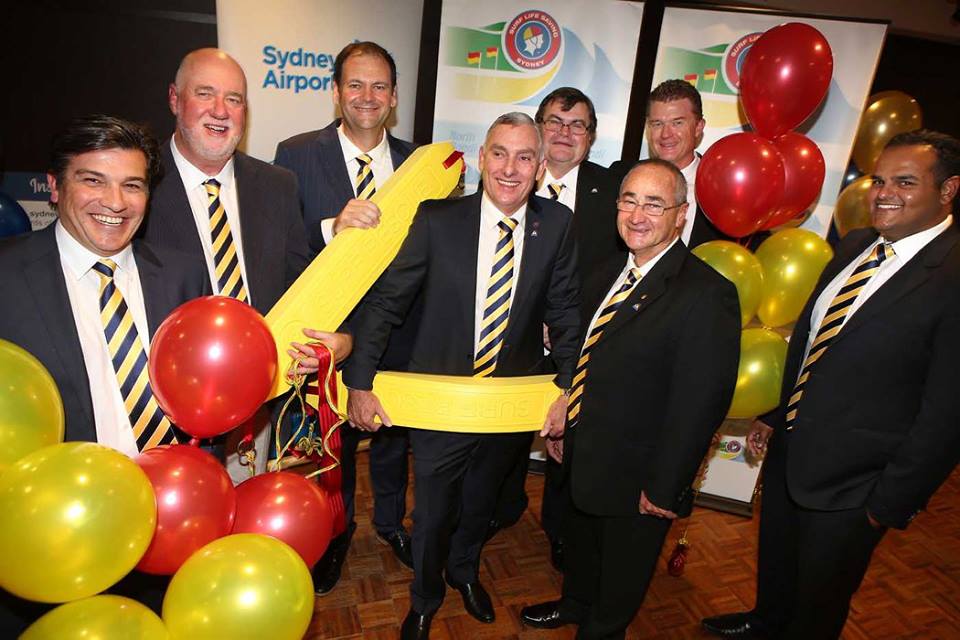
The Awards of Excellence have been running at a state level since 1997. Sydney Branch have won the Branch of the Year Awards twice over this time, firstly in 2017 and again in 2021. The Club of the Year award commenced in 2009 with the Branch winner progressing to the State level from 2018, previously any club could nominate across the state. This award has been won at the State level by Sydney clubs on four occasions, with Clovelly in 2010, Maroubra 2011, North Bondi 2016 and Bronte in 2022.

In 2018, Surf Life Saving NSW was gazetted as an Emergency Service. Sydney’s Rescue Services had been increasing in supporting Emergency Responses throughout the state, supporting the 2020 South Coast bushfires, the 2021 Hawkesbury floods, the 2022 Hawkesbury/Nepean floods, and the 2025 Mid North Coast floods.
In 2024 Surf Rescue 30’s new vessel was launched, with the entity moving from Support Services within the SLS Randwick District to within Surf Life Saving Sydney.
Today Surf Life Saving Sydney supports 15 Surf Life Saving Clubs, from Sydney Harbour to the Royal National Park. We have 20,000 members, 58.5% male and 9.5% are under 18 years old.